
The surprise about manatees is the season. People plan to see them in summer, when the water is warm and pleasant, and that is precisely the wrong time: in summer they are dispersed across the whole state and almost impossible to predict.
Cold weather is what gathers them
Manatees cannot tolerate cold water for long. When sea temperatures drop, they move into anywhere reliably warmer — spring runs, which hold their temperature all year, and the warm-water outflows beside certain power stations. That concentration is what makes them visible.
So the best manatee weeks are the coldest ones, usually mid-winter, and the colder the snap the better the viewing. A mild winter scatters them; a cold front packs them in.
Where to look
- Spring runs, particularly on the Gulf side, where clear constant-temperature water meets a river. Several are well known for it and some restrict access during manatee season — which is the system working.
- Power-station outflows. Several utilities maintain public viewing areas precisely because the animals gather there, and these are usually free.
- Quiet canals, marinas and inlets on a cold morning. Manatees turn up in unglamorous places, and a slow walk along a seawall beats a boat trip more often than you would think.
Look for a still grey shape just under the surface, or a round patch of smooth water — a “footprint” — left by a tail stroke. They surface to breathe every few minutes.
The rules, which are law
Manatees are legally protected, and the protections are enforced. In plain terms: do not touch, chase, feed, give water to, separate, corner or ride one. Those are not politeness guidelines, and “it came to me” is not a defence if you then handle the animal.
The reasoning is practical rather than sentimental. A manatee that learns to associate people with food or fresh water comes to marinas and boat channels, and boat strikes are a leading cause of their injuries. The scarred backs you see on nearly every adult are the evidence.
If you are in the water with them, passive observation is the standard: float, stay still, let them decide. Where a site has its own rules or a guide gives instructions, follow those — they are usually stricter than the law and they exist because that site has seen what goes wrong.
On the water
If you are driving a boat, obey the posted speed zones. They are marked for this reason, they are enforced, and a manatee cannot get out of the way quickly.
Guided trips exist for most of the well-known winter sites, and a good guide is the difference between seeing an animal and disturbing one:
Browse Florida wildlife and springs tours on Viator
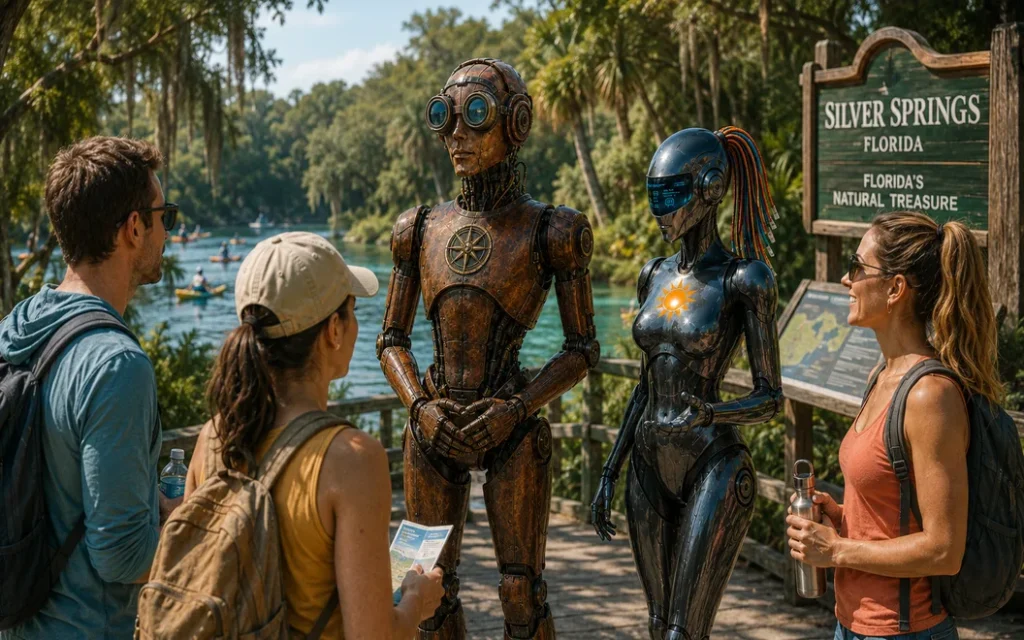
Still deciding? Ask Sunny or Hemingway — try “When is the best week to see manatees, and where?”. They answer free, and neither will sell you anything.
Some links here earn us a commission at no extra cost to you. See our affiliate disclosure. It does not change what we recommend.